Products

Featured products

Contact us

News

  • Ultrafast Laser Processing for Next-Generation Thin-Film Solar Cells
    2025
    12-06
    The evolution of thin-film photovoltaic manufacturing increasingly relies on advanced laser processing technologies. Among these, ultrafast lasers, particularly picosecond and femtosecond systems, have emerged as transformative tools for structuring and optimizing solar cells based on materials like CIGS (Copper Indium Gallium Selenide) and perovskite. Their unique ability to deliver extreme precision with minimal thermal impact addresses critical challenges in processing these often-sensitive materials, directly contributing to enhanced device performance and longevity.
  • Global Solar Market Growth Opportunities and the Lecheng Advantage in PV Production and Test Equipment
    2025
    11-27
    The global PV market is entering a quality‑first, system‑value era: growth is broadening across regions, technologies are differentiating by efficiency and aesthetics, and the industry is consolidating around higher standards and smarter manufacturing. For Lecheng, aligning product roadmaps with these structural trends—especially in high‑efficiency cell and module testing—can unlock sustained share gains and long‑term customer value in both established and emerging markets.
  • R & D and Expansion in Perovskite Solar Cell Laser Equipment
    2025
    11-15
    Recently,Lecheng Intelligence Technology (Suzhou) Co., Ltd. (hereinafter referred to as "Leco Smart") has received angel - round strategic investment from Shanghai DEK Print - Coating Equipment Co., Ltd. The funds from this round of financing will be mainly used for technology research and development, renovation of production sites, and procurement of testing equipment.
  • How Seasonal Changes Shape the Real-World Performance of Perovskite Solar Cells
    2025
    10-11
    The journey of perovskite solar cells is moving decisively from the lab to the landscape. The discovery of their seasonal personality is not a setback but a critical step forward. By using advanced MPPT analysis to decode the messages hidden in winter's performance dip, scientists and engineers are gaining the knowledge needed to formulate more robust materials, optimize device architectures, and finally design perovskite solar cells that don’t just boast a record efficiency on a perfect day, but deliver reliable, clean energy all year round.
  • Efficient All-Perovskite Photovoltaic Cells
    2025
    10-09
    As wearable technology advances from fitness trackers to medical monitors and augmented reality glasses, power autonomy remains the critical bottleneck. Conventional batteries limit device functionality and design freedom, while rigid solar solutions compromise wearability. Enter ultrathin all-perovskite photovoltaic cells – the breakthrough technology enabling truly self-sustaining wearable ecosystems.
  • P1, P2, and P3 Laser Scribing
    2025
    10-07
    The P1, P2, and P3 laser scribing processes each play distinct but interconnected roles in manufacturing high-efficiency thin-film solar cells. P1 establishes the foundational electrical isolation, P2 creates the critical series interconnection between cells, and P3 completes the circuit isolation. Together, these precision processes enable the production of series-connected solar modules with minimized dead areas and maximized active area for power generation. As solar cell technologies continue to advance toward higher efficiencies and thinner layer architectures, the precision and control offered by laser scribing will remain indispensable for commercial viability.
  • Introduction to Perovskite Solar Cells
    2025
    09-20
    The structure of perovskite solar cells is illustrated in the figure below. Its core is a light-absorbing material composed of organometal halides with a perovskite crystal structure (ABX₃) (unit cell structure shown in the attached figure). In this perovskite ABX₃ structure, A is the methylammonium group (CH₃NH₃⁺), B is a metal lead atom, and X is a halogen atom such as chlorine, bromine, or iodine.
  • Research and Application of Laser Technology in Perovskite Solar Cells
    2025
    09-13
    The manufacturing process of perovskite solar cells involves multiple precise steps, with laser technology playing a critical role in enhancing efficiency and stability. The key steps include: Substrate Preparation: Cleaning and pre-treating the substrate (e.g., glass or flexible polymers) to ensure optimal adhesion and conductivity. Electrode Deposition: Depositing transparent conductive oxides (e.g., ITO or FTO) as bottom electrodes.
  • Investment Opportunities in Perovskite Solar Cell Industrialization
    2025
    09-06
    Perovskite solar cells (PSCs) represent a transformative technology in photovoltaics, with industrialization accelerating globally. Unlike traditional silicon-based cells, PSCs require entirely new production processes and equipment, creating significant investment opportunities in specialized manufacturing tools. The core equipment includes coating, deposition, laser, and encapsulation systems, with laser etching and thin-film deposition being particularly critical for scalable production.
  • Seasonal Effects in Perovskite Solar Cells: MPPT Reveals Degradation Mechanisms and Stability Optimization
    2025
    09-04
    Perovskite solar cells (PSCs) have achieved a power conversion efficiency (PCE) of up to 26.95% under standard test conditions (STC). The current research focus has shifted from efficiency improvement to scalability and stability enhancement. Based on four years of outdoor data from Berlin, this study reveals significant seasonal performance fluctuations in PSCs: stable performance in summer but a substantial decline in winter (up to 30%).
  • Demystifying Beam Splitting Technologies in Perovskite Photovoltaic Laser Processing
    Demystifying Beam Splitting Technologies in Perovskite Photovoltaic Laser Processing
    The transition to gigawatt-scale perovskite solar production hinges on precision laser processing, where beam splitting technology plays a pivotal role. By dividing a single laser source into multiple beams, this technique enables simultaneous scribing of P1-P3 patterns and edge isolation (P4), directly impacting throughput, dead zone control, and production costs. Current industrial approaches primarily include mechanical beam splitting and diffractive optical elements (DOEs), each with distinct advantages for perovskite’s thermal sensitivity and scalability requirements.
    More
  • The Application of Laser Technology in the Industrialization of Perovskite Solar Cells
    The Application of Laser Technology in the Industrialization of Perovskite Solar Cells
    Perovskite solar cells (PSCs) represent the third generation of thin-film solar technology, renowned for their high efficiency, low cost, and flexibility. As industrialization progresses, laser technology has emerged as a critical enabler, addressing key challenges in precision processing and scalability. This article explores the multifaceted role of lasers in PSC manufacturing.
    More
  • Roll-to-Roll (R2R) Laser Scribing System for Thin-Film Solar Cells
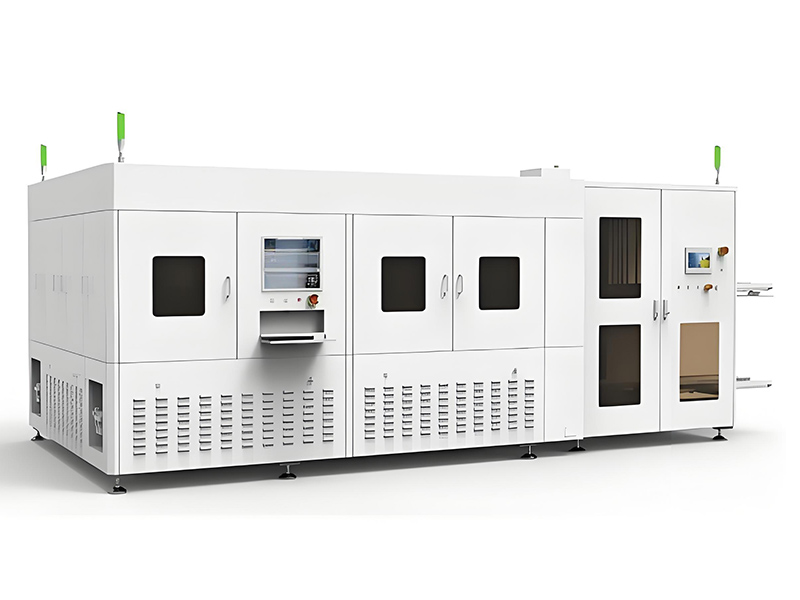
    Roll-to-Roll (R2R) Laser Scribing System for Thin-Film Solar Cells
    The equipment utilizes a high-energy-density laser beam, precisely controlled by a computer system, to process roll-to-roll thin-film solar cell materials according to pre-programmed scribing patterns. Through laser thermal or cold processing effects, the thin-film material is instantaneously vaporized, separated, or modified, achieving precise scribing to either segment the cells or create specific circuit patterns on them.
    More
  • Perovskite Photovoltaic Module
    Perovskite Photovoltaic Module
    Lecheng's laser scribing equipment, equipped with a high-precision laser control system, achieves micron-level patterning accuracy with smooth, thermally damage-free edges. This significantly reduces internal resistance losses in solar cells, pushing power conversion efficiency to industry-leading levels—perfectly meeting the high-power output demands of mass production.
    More
  • High-Precision Laser Micromachining Equipment
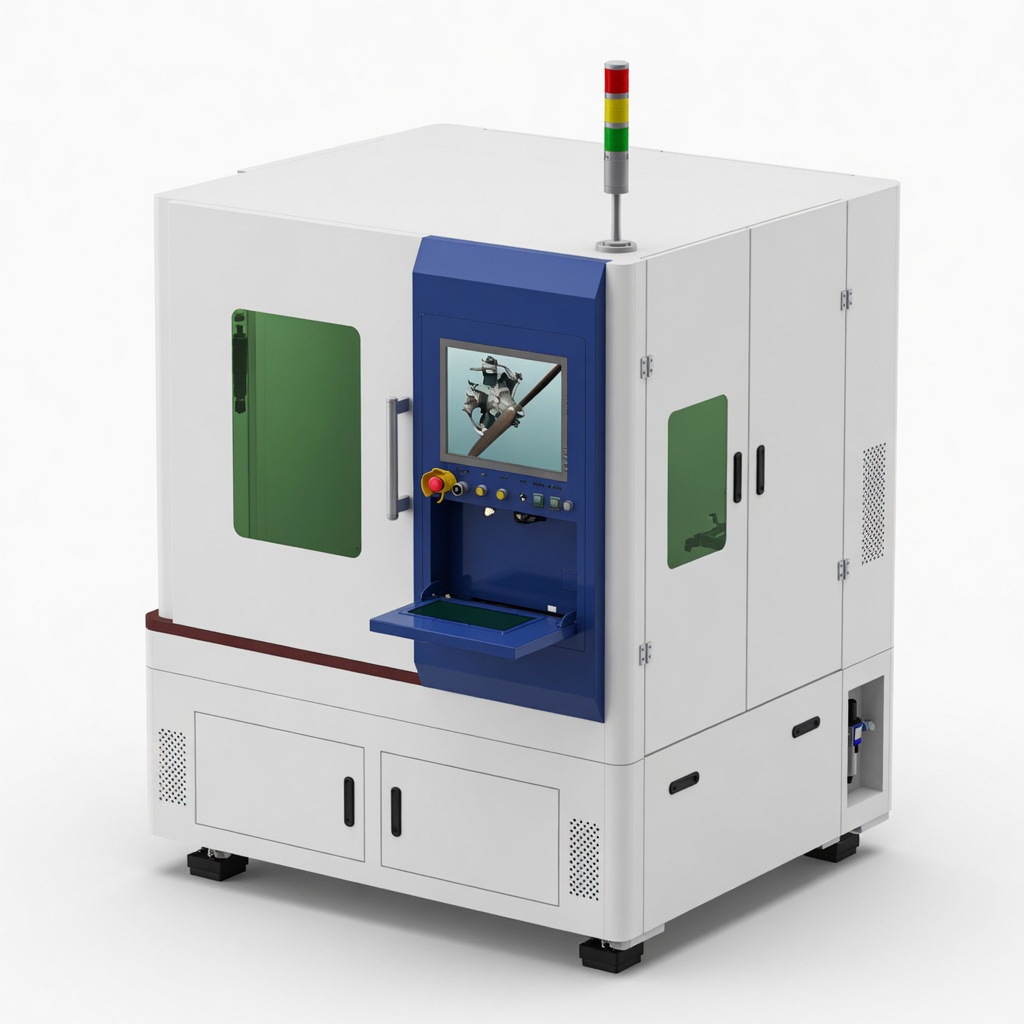
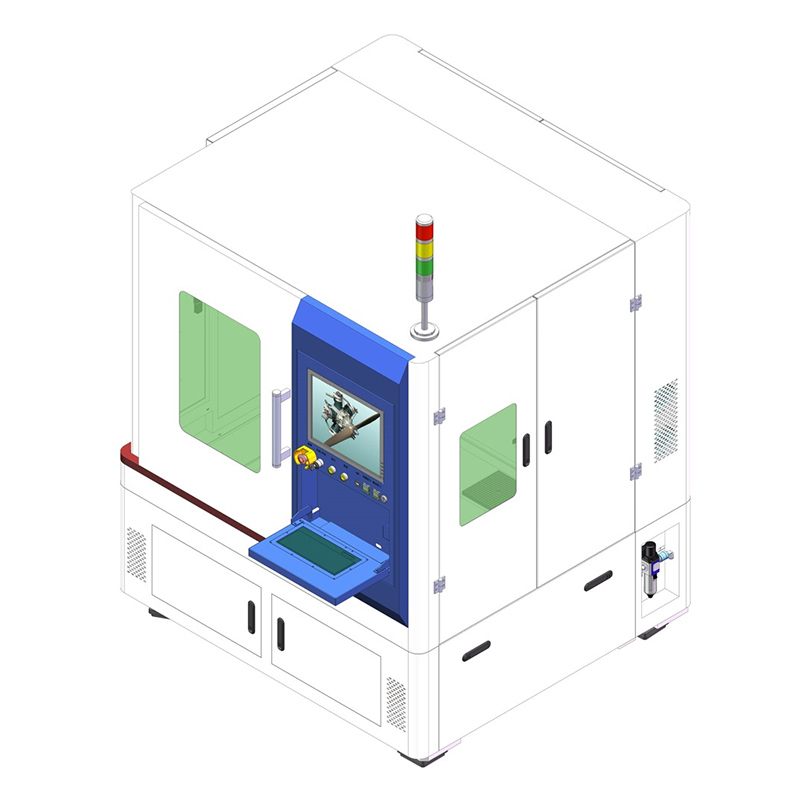
    High-Precision Laser Micromachining Equipment
    Laser high-precision micromachining technology achieves material processing through precise control of core parameters such as wavelength, pulse width, and energy density, utilizing either thermal or cold processing mechanisms. This induces instantaneous material vaporization, melting, or modification, enabling operations such as cutting, drilling, engraving, and surface treatment. It stands as a pivotal technology in high-precision manufacturing.
    More
  • Customer Acclaim
    Customer Acclaim
    This prestigious accolade has significantly elevated Lecheng Intelligent's industry visibility and reputation, distinguishing it as a trusted leader among suppliers. The recognition solidifies its competitive edge and lays a robust foundation for market expansion.
    More

40px

80px

80px

80px

Get Quote