














For years, the headline story for perovskite solar cells (PSCs) has been a relentless climb in power conversion efficiency, recently reaching a certified 26.95%. However, as the technology matures, the critical question shifts from "How efficient can they be in the lab?" to "How reliably will they perform on your roof?" New research delving into long-term outdoor data is providing crucial answers, revealing that the true test for PSCs isn't just a single number, but the changing face of the four seasons.
A groundbreaking four-year study conducted in Berlin, Germany, has uncovered a significant and previously nuanced seasonal effect. While PSCs demonstrate commendable stability during the warm, sunny summer months, their performance undergoes a substantial decline in winter, with power output dropping by as much as 30%. This isn't a simple case of less sunshine; it's a complex interplay of environmental stressors that challenge the very physics of the perovskite material. The key to understanding this phenomenon lies not in ignoring winter, but in embracing its challenges through advanced diagnostic tools like Maximum Power Point Tracking (MPPT).
So, what causes this "winter blues" in perovskite cells? The research points to a confluence of factors. First, the spectral changes in sunlight: winter light is diffused and has a different spectral composition, which can be less ideal for the perovskite absorber layer. Second, temperature coefficients play a role—colder temperatures affect charge carrier mobility and recombination rates. But perhaps the most intriguing factor is the material's metastable state dynamics. Perovskites can exist in slightly different energy configurations, and environmental shifts like temperature and light intensity can push them between these states. In winter, the combination of low light and low temperature can trap the material in a less electrically active, metastable state, leading to reversible power loss that standard quick lab tests might miss.

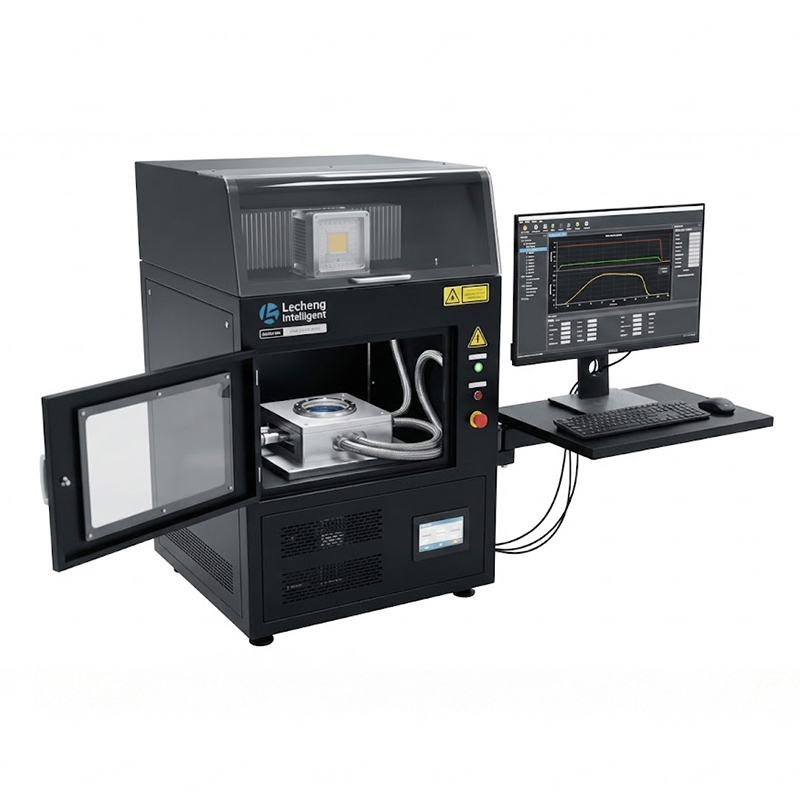
This is where MPPT testing transitions from a simple operational function to a powerful diagnostic tool. By continuously tracking the absolute maximum power a module can produce in real-time, MPPT data acts as a detailed "health monitor" over seasons. It allows researchers to correlate specific weather patterns—a cold snap, a series of cloudy days—with specific performance dips. This process, known as "climate characterization," precisely quantifies the impact of metastable dynamics. It moves the conversation from observing that performance drops in winter to understanding exactly why and by how much, under a specific set of climatic conditions.
For the industry, these insights are invaluable. They prove that stability is not a single metric but a multi-dimensional challenge. The goal is no longer just to build a cell that survives 1,000 hours under a continuous, intense light, but to engineer one that remains resilient through the humid summer heat, the freezing winter cold, and everything in between. This understanding directly informs accelerated lifetime testing protocols, ensuring they incorporate thermal cycling and light spectrum variations to better predict real-world, all-season longevity.
The journey of perovskite solar cells is moving decisively from the lab to the landscape. The discovery of their seasonal personality is not a setback but a critical step forward. By using advanced MPPT analysis to decode the messages hidden in winter's performance dip, scientists and engineers are gaining the knowledge needed to formulate more robust materials, optimize device architectures, and finally design perovskite solar cells that don’t just boast a record efficiency on a perfect day, but deliver reliable, clean energy all year round.