News

  • Space Photovoltaics: Technologies, Testing Challenges and Equipment Selection
    2026
    09-21
    Space photovoltaic systems must balance efficiency, specific power, radiation resistance, thermal stability and end-of-life performance. This guide explains the main cell technologies, AM0 testing priorities and how to evaluate a test platform.
  • 30.1% All-Perovskite Triple-Junction Solar Cells: Device Physics and the Path to Space PV
    2026
    09-21
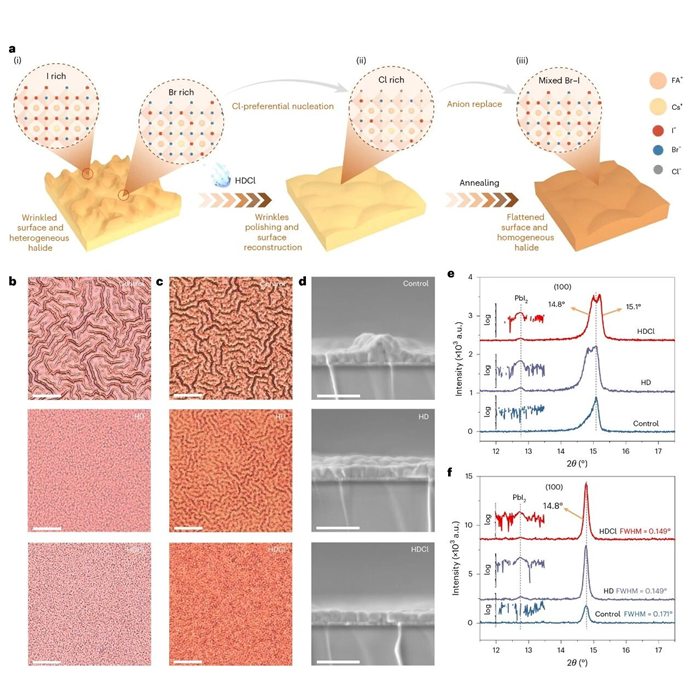
    A new all-perovskite triple-junction cell has reached 30.1% efficiency by controlling crystallization in a 2.0 eV ultrawide-bandgap top cell. This technical review explains the loss mechanism, SRH strategy, device results and qualification required for space photovoltaics.
  • Laser Processing FAQ: 10 Questions from PV and Precision Manufacturing Engineers
    2026
    07-18
    Material stack or part drawing, the process goal (scribe/cut/weld/mark), tolerance and quality criteria, plate or part size, and target throughput. With these we select wavelength, pulse regime and platform, then prove it on your samples.
  • Choosing Laser Equipment for Photovoltaic Manufacturing: A Specifier Checklist
    2026
    07-18
    Photovoltaic factories buy lasers for a dozen jobs — scribing, edge deletion, cutting, drilling, marking, welding — and the same physics questions decide success in each: which wavelength does this layer absorb, how short must the pulse be to avoid thermal damage, and how accurately must the beam land. This checklist walks through the decisions in the order a line-builder should make them.
  • Laser Scribing in Perovskite Solar Module Production: P1, P2, P3 Explained
    2026
    07-18
    Perovskite photovoltaics move from lab records to factory lines through one deceptively narrow gate: laser scribing. The three patterning steps — P1, P2, P3 — turn a full-area thin-film stack into series-connected cells, and they set both the module voltage and the dead-area losses that separate a champion module from an average one. Here is what each step does and where production lines win or lose efficiency.
  • Solar Simulator RFQ Guide What Information Buyers Should Provide
    2026
    07-06
    To get an accurate solar simulator quotation, buyers should provide clear information about sample size, solar cell type, required test area, spectral match, irradiance uniformity, IV tester needs, calibration requirements and application purpose. A complete RFQ helps suppliers recommend the right system faster and avoid wrong equipment selection.
  • How To Reduce Testing Errors With The Right Solar Simulator System
    2026
    07-05
    Testing errors in solar cell measurement can come from unstable light output, poor spectral match, uneven irradiance, inaccurate calibration, temperature variation, weak IV integration and operator mistakes. Choosing the right solar simulator system helps laboratories and pilot lines obtain more reliable efficiency data and reduce repeated testing.
  • Solar Simulator With IV Tester Why Integrated Testing Matters
    2026
    07-04
    Many laboratories purchase a solar simulator and IV tester separately, but integrated testing systems can significantly improve measurement accuracy, testing efficiency and data consistency. For perovskite, thin-film, silicon and tandem solar cell projects, an integrated solar simulator and IV testing platform often provides more reliable and repeatable results.
  • What Affects Solar Simulator Accuracy In PV Cell Testing
    2026
    07-03
    Solar simulator accuracy directly affects efficiency measurements, IV curves and research results. Even small deviations in irradiance, spectral match or calibration can lead to significant differences in photovoltaic cell performance data. Buyers should understand the key factors that influence accuracy before selecting testing equipment.
  • Solar Simulator For Thin Film Solar Modules Key Specifications Buyers Need
    2026
    07-02
    Choosing a solar simulator for thin-film solar modules requires careful evaluation of test area, spectral match, irradiance uniformity, temporal stability, IV integration, calibration method and module handling. These specifications directly affect testing accuracy, efficiency data and pilot line validation.

40px

80px

80px

80px

Get Quote