Products

Featured products

Contact us

News

  • How To Reduce Heat Affected Zone And Improve Efficiency In Perovskite Laser Lines
    2026
    06-06
    Reducing HAZ is a key factor in improving perovskite laser line efficiency and reliability. Evaluate laser system parameters, motion accuracy, and cooling strategies to achieve precise, high-yield module scribing.
  • Perovskite Laser Processing System Specification Guide For Industrial Buyers
    2026
    06-04
    Understanding laser system specifications is essential for industrial perovskite module production. Buyers should assess laser wavelength, pulse width, alignment precision, beam quality, substrate compatibility, automation, and software features to ensure high yield, reproducibility, and scalability.
  • How Alignment Accuracy Impacts Yield In Perovskite Module Manufacturing
    2026
    06-02
    Alignment accuracy during P1, P2, and P3 laser scribing directly affects perovskite module yield. Misalignment reduces active area, increases dead zones, and can cause shorts or interconnection failures. Buyers and engineers must carefully assess equipment precision and repeatability to maximize yield.
  • Perovskite Laser Scribing vs Mechanical Scribing: Which Is Better
    2026
    05-16
    Laser scribing and mechanical scribing can both be used in thin-film solar cell research, but they are not equal for scalable perovskite module manufacturing. Laser scribing offers higher precision, better repeatability, lower mechanical stress and stronger automation potential. For buyers planning perovskite pilot lines or future commercial production, laser scribing is usually the more reliable and scalable solution.
  • Standard Machine vs Custom Laser Scribing Solution: Which Is Better?
    2026
    04-27
    There is no universal answer to whether a standard machine or a customized laser scribing solution is better. The right choice depends on balancing cost, performance, and long-term production needs. For international buyers, the most effective approach is to select a solution that aligns closely with their process requirements and provides stable, efficient performance over time.
  • The Core Technologies Behind High-Precision Laser Scribing
    2026
    03-21
    High-precision laser scribing is not the result of a single breakthrough, but the meticulous integration of several core technology pillars: the controlled photon energy of advanced lasers, the nanoscale stability of precision mechanics, the adaptive intelligence of machine vision, and the orchestration of sophisticated software. It is the harmonious interplay of the laser source, the motion platform, the vision system, and the control software​ that transforms a powerful beam of light into a reliable, micron-scale manufacturing tool. This integrated technological ecosystem, as embodied in solutions from companies like Lecheng Intelligent, is what enables the manufacturing of today's most advanced thin-film solar cells and electronic devices, where a micron's deviation can mean the difference between high efficiency and failure. In the pursuit of smaller, faster, and more efficient products, mastering these core technologies is not optional—it is the very definition of capability.
  • Demystifying Beam Splitting Technologies in Perovskite Photovoltaic Laser Processing
    2026
    03-12
    In essence, beam splitting technology is far more than a simple speed booster; it is the precision orchestrator of light that makes high-volume, high-yield perovskite photovoltaic manufacturing viable. By transforming a single laser source into a synchronized array of precision tools, companies like Lecheng are directly addressing the core production challenges of speed, uniformity, and cost. This innovation is critical not only for the current commercialization of perovskite modules but also as a key enabler for the more efficient and complex tandem solar cells that represent the future of solar power.
  • Dissimilar Metal Welding: Overcoming the Challenges of Copper-Aluminum Joints
    2026
    03-10
    Mastering the laser kerf is mastering a fundamental building block of modern precision manufacturing. In the context of perovskite photovoltaics, achieving a consistent 0.01–0.05mm kerf is synonymous with achieving high efficiency, reliability, and commercial viability. It represents a convergence of advanced laser physics, precision motion control, and process engineering. For manufacturers, investing in technology that delivers such precision, like that from Lecheng, is not merely about making a cut; it's about carving out a competitive edge in the future of solar energy.
  • Why Beam Splitting Technology is Key to Gigawatt-Scale Perovskite Production
    2026
    01-20
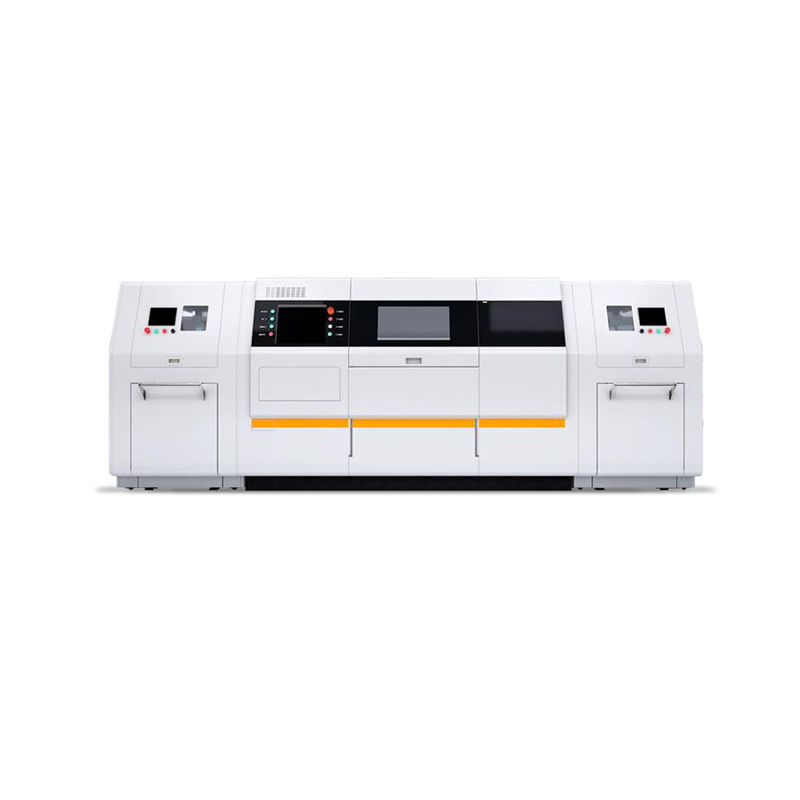
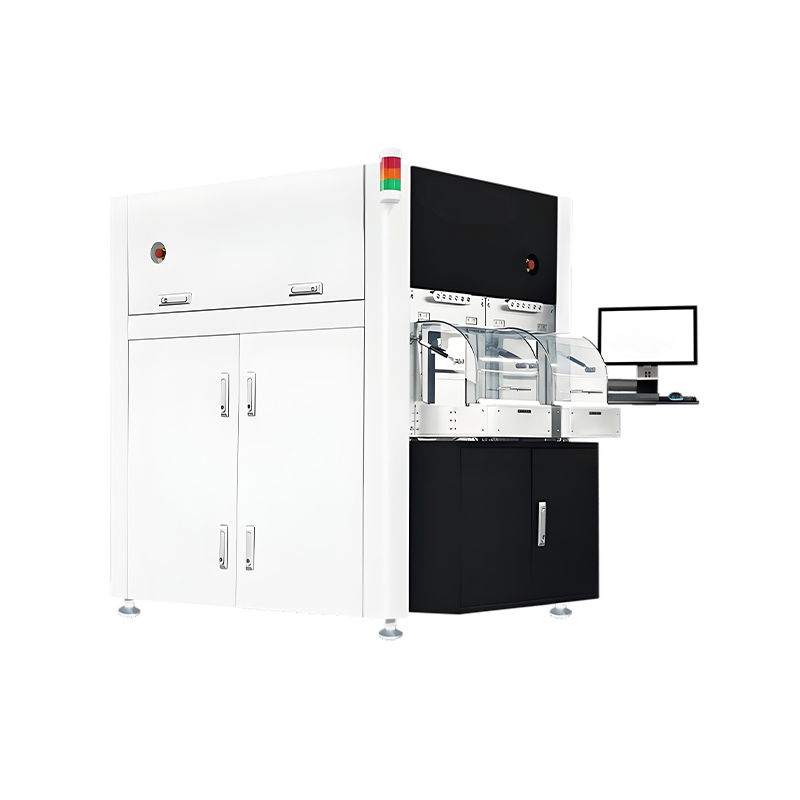
    Beam splitting technology is the cornerstone of high-speed, precision perovskite production, bridging the gap between laboratory innovation and industrial gigawatt manufacturing. By enabling parallel processing, enhancing material compatibility, and reducing operational costs, it positions companies like Lecheng at the forefront of the solar energy transition.
  • Why Precision Laser Processing is Key to Higher Perovskite Module Efficiency
    2026
    01-10
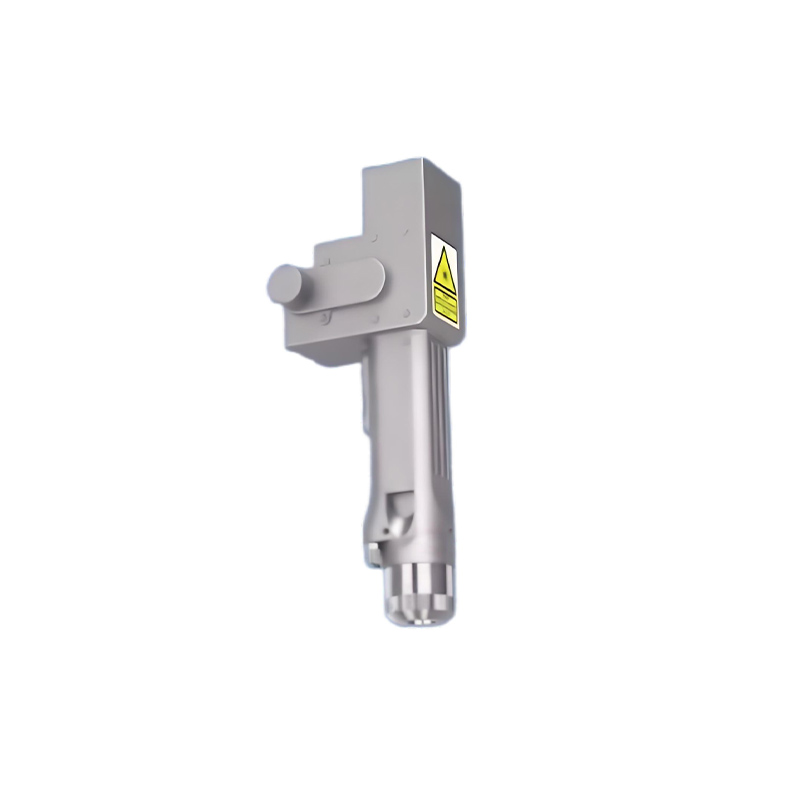
    In the race to commercialize high-efficiency perovskite solar modules, precision laser processing is not merely an optional manufacturing step; it is a fundamental enabler. By minimizing dead zones, preserving material integrity with ultra-low thermal impact, and ensuring reproducibility across large areas, companies like Lecheng Intelligent are providing the essential tools to unlock the full potential of this promising technology. The path to higher module efficiency is, quite literally, being carved by laser light.

    40px

    80px

    80px

    80px

    Get Quote