


Picosecond vs Femtosecond Lasers: A Comprehensive Technical Comparison
Introduction
In the realm of advanced laser technology, ultrafast lasers have revolutionized precision manufacturing, medical procedures, and scientific research. Among these, picosecond and femtosecond lasers represent the cutting edge of ultrashort pulse technology. While both operate at timescales incomprehensibly fast to humans, the subtle differences between them significantly impact their applications and effectiveness. This technical comparison examines the fundamental characteristics, mechanisms, and practical considerations of these two laser technologies.
The evolution of ultrafast laser technology over the past decade has enabled breakthroughs across multiple industries. From enabling minimally invasive eye surgeries to facilitating unprecedented precision in material processing, these lasers have become indispensable tools in high-tech applications where precision and minimal collateral damage are paramount .
1 Fundamental Concepts and Physical Principles
1.1 Timescale Definitions
The primary distinction between picosecond and femtosecond lasers lies in their pulse durations. A picosecond (ps) equals 10⁻¹² seconds—one trillionth of a second—while a femtosecond (fs) is 10⁻¹⁵ seconds, one quadrillionth of a second. To visualize this difference, consider that one femtosecond is to one picosecond what one second is to approximately 31,709 years.
This difference in pulse duration directly impacts their peak power characteristics. When comparing lasers with identical pulse energy, femtosecond lasers achieve significantly higher peak power because the energy is compressed into a much shorter time frame. This higher peak power enables unique nonlinear optical phenomena that are less pronounced in picosecond systems.
1.2 Material Interaction Mechanisms
The fundamental difference in how these lasers interact with materials stems from their pulse durations relative to the thermal relaxation time of materials. Picosecond lasers deposit energy faster than it can diffuse away from the impact site through thermal conduction, but still result in some heat accumulation and a larger Heat Affected Zone (HAZ). In contrast, femtosecond lasers deposit energy so rapidly that the material vaporizes before significant heat diffusion occurs, resulting in a significantly smaller HAZ .
This leads to different ablation mechanisms. Picosecond laser material removal often combines thermal and non-thermal processes, where the pulse heats the material causing melting and evaporation alongside some mechanical stress. Femtosecond lasers operate predominantly through non-thermal ablation, where the high energy density breaks down material at the atomic level, leading to extremely clean material removal with minimal collateral damage .
The "cold ablation" characteristic of ultrafast lasers occurs because their pulses are so short that the energy directed at a material cannot escape as heat. Instead, the material transitions directly from solid to gas phase (sublimation), skipping the melt phase entirely. This minimizes or eliminates many undesirable effects like debris, sub-surface cracking, or crystalline structure formation.
2 Technical Performance Comparison
2.1 Precision and Quality Metrics
The smaller heat-affected zone of femtosecond lasers makes them superior for applications requiring the highest precision. When machining metals, femtosecond lasers produce zero topside burr with slightly better-defined features and lower surface roughness compared to picosecond lasers.
In terms of ablation quality, femtosecond lasers generally provide cleaner results across most materials. For plastics processing, femtosecond lasers can handle a greater range of materials effectively, while picosecond lasers typically require green or ultraviolet wavelengths to process plastics with comparable quality .
The achievable feature size is also influenced by wavelength options. For both laser types, available wavelengths include infrared (IR), green (GR), and ultraviolet (UV). The smallest focus spot size achievable is directly related to the wavelength—a UV laser can focus to a spot size one-third the diameter of an IR laser, enabling finer feature creation .
2.2 Processing Speed and Throughput
While femtosecond lasers generally offer superior precision, picosecond lasers typically provide higher material removal rates for many applications. This speed advantage makes picosecond lasers more suitable for processes where extreme precision isn't the primary requirement but throughput matters .
The repetition rate capabilities also differ between the technologies. Picosecond lasers offer greater flexibility for power scaling to 50W or more and pulse repetition rates to 500 Hz or beyond, making them considerably more productive for many industrial applications.
For specific applications like glass processing, picosecond lasers can achieve material removal rates ranging from approximately 0.1 to over 1 mm³/min per watt of laser power. For stainless steel, removal rates typically range between 0.05 to 0.2 mm³/min per watt.
Table: Comparative Processing Characteristics of Picosecond and Femtosecond Lasers
3 Applications and Use Cases
3.1 Medical Applications
In ophthalmic surgery, femtosecond lasers have revolutionized procedures like LASIK and cataract surgery. Their extreme precision enables creation of corneal flaps with minimal tissue damage, outperforming mechanical microkeratomes in flap thickness predictability and reducing complications like button-holes or free caps.
For dermatological applications, picosecond lasers excel in tattoo removal and skin rejuvenation. Their pulses effectively shatter ink particles into tiny fragments that the body can eliminate, while also stimulating collagen production for wrinkle reduction with minimal downtime.
Femtosecond lasers enable highly precise tissue dissection in delicate procedures, benefiting neurosurgery and other microsurgical applications where preservation of surrounding tissue is critical.
3.2 Industrial and Materials Processing
In micro-machining applications, picosecond lasers serve as universal tools for processing diverse materials including metals, semiconductors, and transparent materials like glass and sapphire. They can create features as small as 31nm with minimal thermal damage .
Femtosecond lasers excel in high-precision micro-machining requiring sub-micron accuracy, particularly for creating extremely precise features in challenging materials without thermal damage. They're indispensable for applications like thin film removal in semiconductor manufacturing where underlying substrate protection is critical.
For transparent materials processing, both lasers enable internal modification, but femtosecond lasers particularly shine in three-dimensional micro- and nanofabrication within transparent materials via nonlinear interactions like multiphoton absorption.
3.3 Scientific Research Applications
In spectroscopy, both laser types investigate ultrafast processes, with femtosecond lasers providing higher temporal resolution for capturing extremely rapid molecular events.
The field of material science utilizes both technologies for studying material responses to ultra-short light pulses, with femtosecond lasers enabling observation of phenomena at previously inaccessible timescales.
Femtosecond lasers have enabled innovative three-dimensional fabrication approaches inside transparent materials through multiphoton polymerization, creating microstructures for photonic devices, microfluidics, and biomedical applications
.
4 Practical Considerations and Selection Criteria
4.1 Cost and Economic Factors
The significant price difference between these technologies remains a crucial consideration. Femtosecond laser systems typically command higher initial investment and maintenance costs, with complete systems often exceeding $400,000.
Picosecond lasers have become increasingly economical, with photon costs dropping by a factor greater than 10 over recent years. The total cost of ownership for industrial picosecond lasers has reached approximately €8-12 per hour, making them more accessible for various applications .
The decision between technologies should include throughput requirements and return on investment analysis. For applications where picosecond laser precision suffices, their higher processing speeds can deliver better economic value .
4.2 System Integration and Operational Requirements
Environmental stability is crucial for ultrafast laser systems. Temperature variations beyond a few degrees can cause significant issues with fixtures, stages, and laser pointing stability in precision applications. These systems typically require climate-controlled environments to maintain performance.
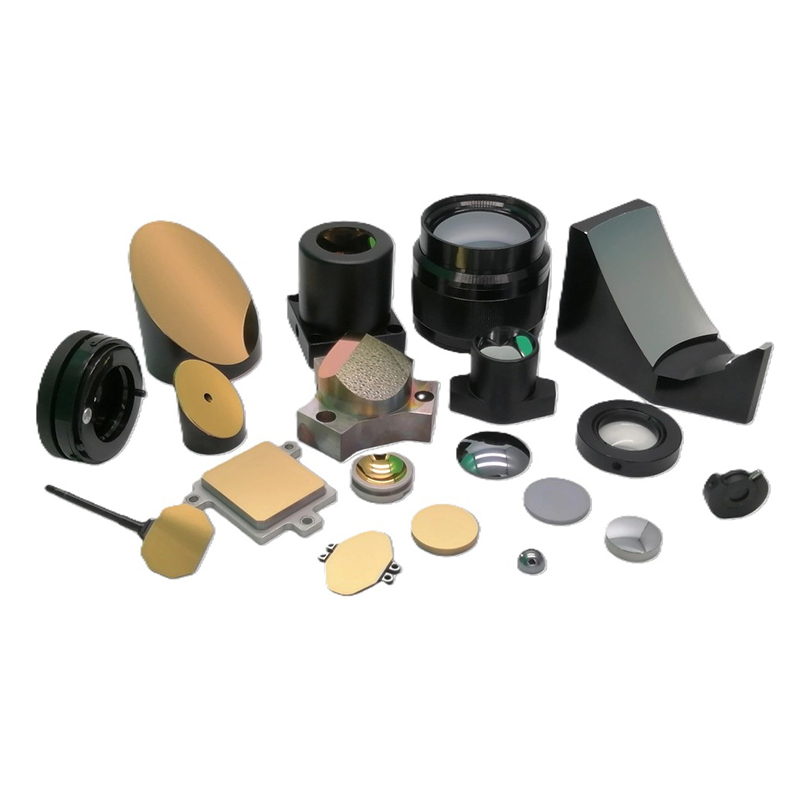
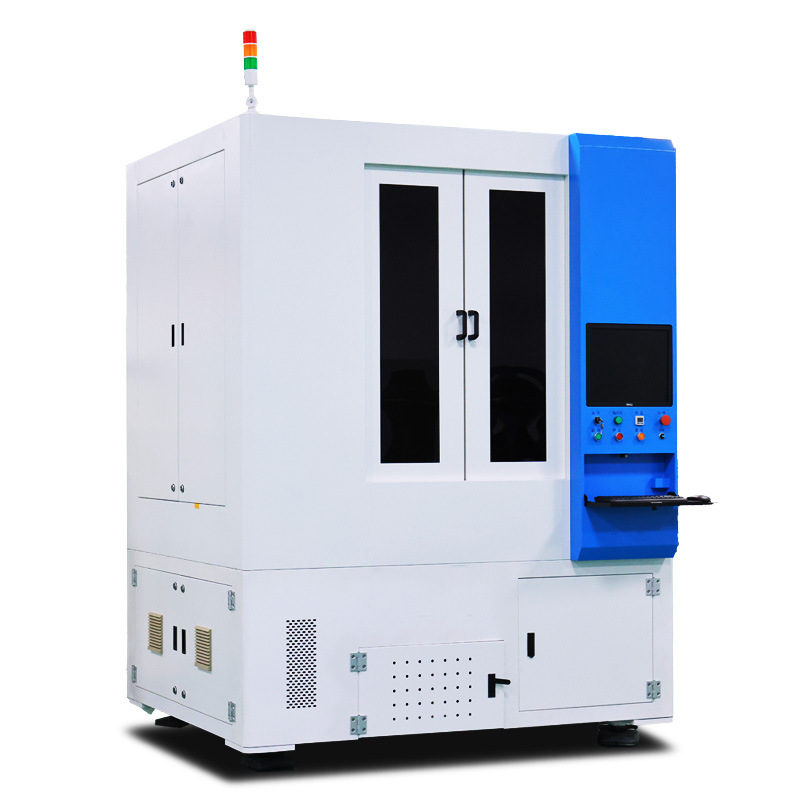
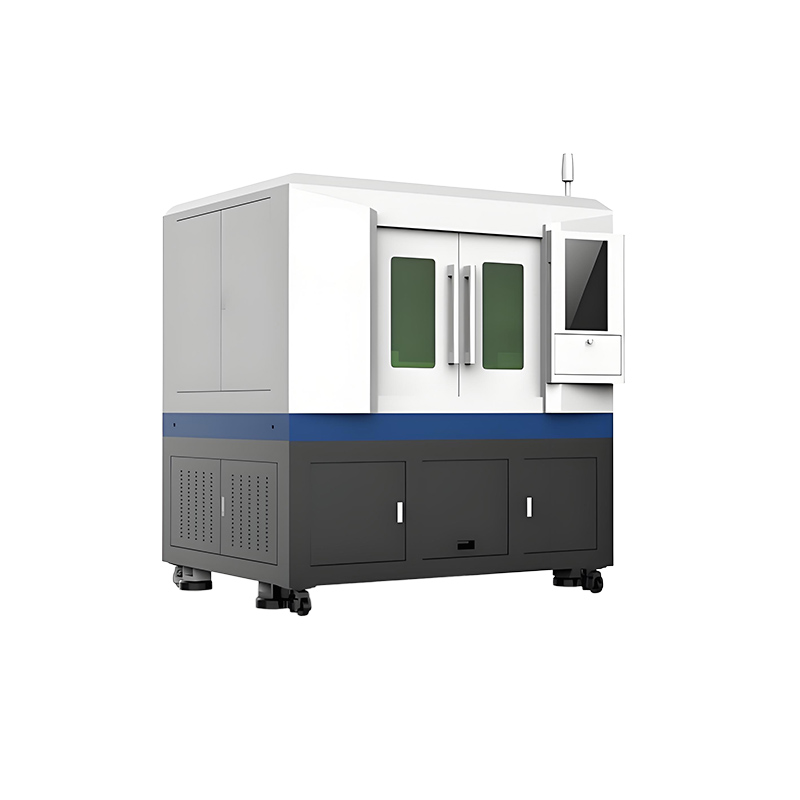
The integration complexity of ultrafast lasers involves multiple components including the laser source, optical path, focusing optics, motion systems, vision systems, and debris management. Each element must be carefully engineered to maintain the laser's precision capabilities
Debris management is particularly important for ultrafast lasers, which produce nanoparticles that tend to be charged and stick to surfaces. Effective removal often requires specialized extraction systems or ultrasonic cleaning procedures.
4.3 Application-Specific Selection Guidelines
Choosing between picosecond and femtosecond technologies requires evaluating several factors:
•Material properties: Some materials are more susceptible to thermal damage, necessitating femtosecond precision
•Precision requirements: Applications demanding the highest precision and minimal HAZ typically justify femtosecond laser selection
•Throughput needs: Picosecond lasers often provide higher processing speeds for applications where their precision level suffices
•Total cost of ownership: Beyond initial investment, consider maintenance, operational costs, and required ancillary systems
For many applications, the optimal approach involves testing both technologies with specific materials and processes. Companies like Amada Miyachi America typically run comparative samples on both laser types when defining application requirements.
Conclusion
Picosecond and femtosecond lasers each occupy important positions in the landscape of ultrafast laser technologies. While femtosecond lasers provide superior precision with minimal thermal impact, picosecond lasers offer an attractive balance of performance and cost-effectiveness for many applications.
The decision between these technologies ultimately depends on specific application requirements, precision needs, throughput targets, and budget constraints. As both technologies continue evolving, with costs decreasing and capabilities expanding, their adoption across medical, industrial, and scientific fields is expected to grow significantly.
Future developments will likely focus on increasing power levels, improving reliability, reducing costs, and enhancing integration capabilities. These advancements will open new application possibilities and make ultrafast laser processing more accessible across various industries .