


Perovskite Equipment Specification Guide
Perovskite Laser Scribing Equipment Specification Guide For Buyers
When buying perovskite laser scribing equipment, many buyers focus only on price or laser power. However, real purchasing decisions should be based on laser wavelength, pulse width, alignment accuracy, substrate size, process capability, automation level and future upgrade flexibility. This guide helps buyers understand the most important technical specifications before ordering.
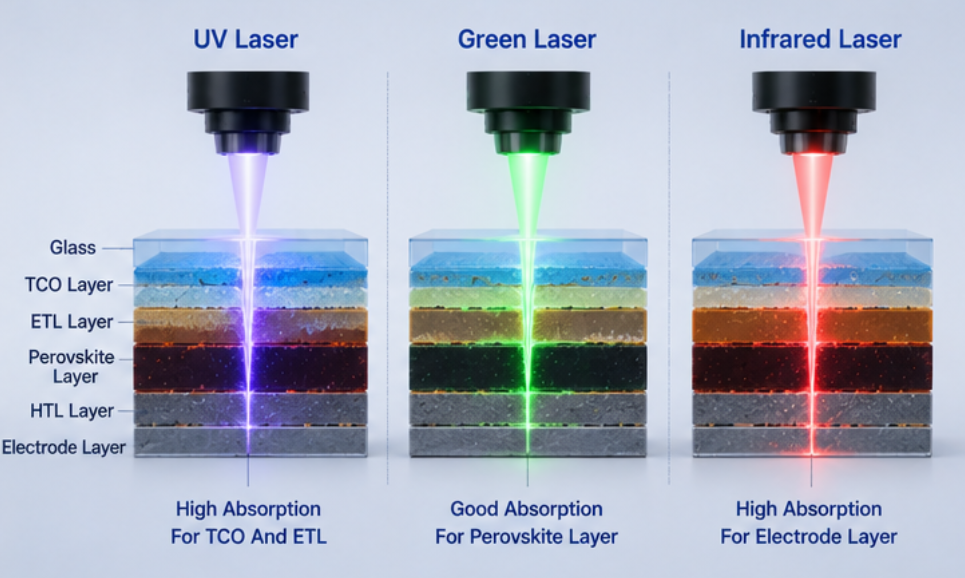
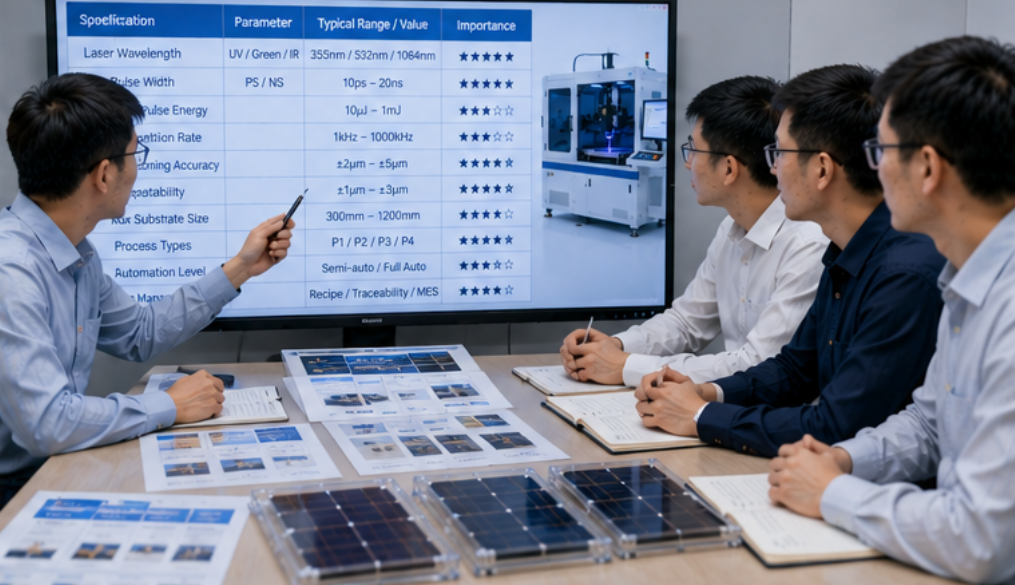
Get QuoteDifferent perovskite material stacks require different laser configurations. A machine that works well for one project may not be suitable for another. Buyers should understand equipment specifications before requesting quotations to avoid buying a system that cannot meet future production requirements. Laser wavelength affects material absorption and layer selectivity. UV laser Green laser Infrared laser Different layers may require different wavelengths depending on TCO, ETL, perovskite and electrode materials. Pulse width affects heat transfer and edge quality. Nanosecond Picosecond Femtosecond Shorter pulse widths often reduce heat affected zone but may increase equipment cost. P1, P2 and P3 require precise alignment. Buyers should evaluate: Motion platform precision Vision alignment capability Repeatability performance Buyers should confirm whether the machine supports: P1 laser scribing P2 laser scribing P3 laser scribing P4 edge deletion Some machines only support single-process applications. Software flexibility matters for recipe management, parameter storage and future production upgrades. Recipe management Data tracking Automatic loading MES integration Understanding specifications helps buyers avoid overspending or buying under-configured equipment. The right machine should match both current R&D needs and future pilot production plans. Contact Lecheng Laser for specification recommendations.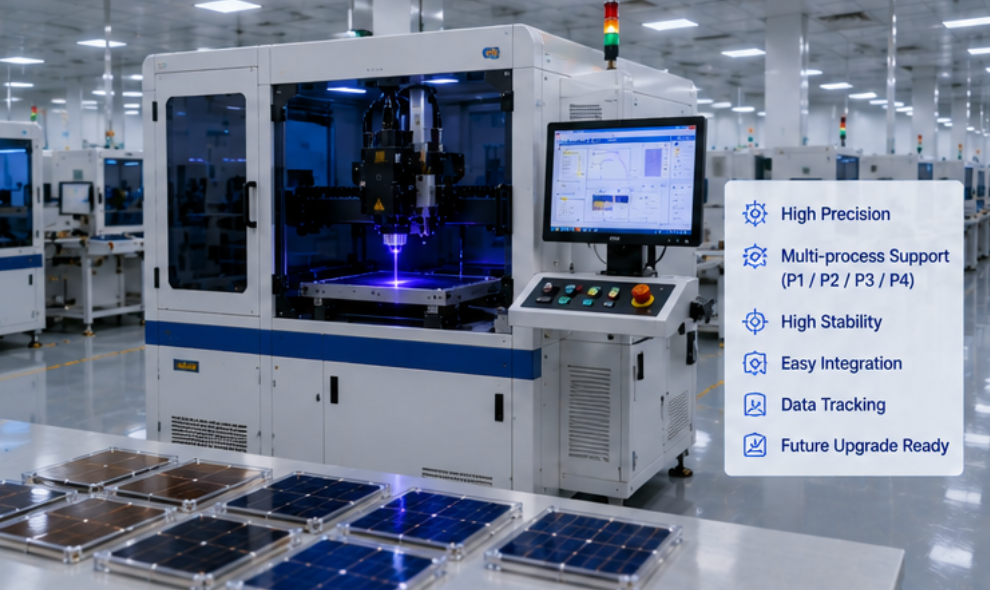
Why Specifications Matter
1. Laser Wavelength
2. Pulse Width
3. Positioning Accuracy
Key Equipment Specifications
Specification Why It Matters Laser Wavelength Layer absorption compatibility Pulse Width Heat affected zone control Beam Quality Scribing consistency Alignment Accuracy Module yield improvement Substrate Size Range Future scalability Automation Level Labor efficiency 
4. Supported Process Types
5. Automation And Software
Conclusion
Need Help Choosing Specifications?