


Dissimilar Metal Welding: Overcoming the Challenges of Copper-Aluminum Joints
The Critical Dimension: Why Kerf Width Matters in Precision Scribing
In the world of laser micromachining, especially for high-stakes applications like perovskite solar cell manufacturing, the laser kerf—the width of material removed by the laser beam—is far more than a mere specification. It is a critical performance parameter that directly dictates the electrical and optical efficiency of the final device. In processes such as P1, P2, and P3 scribing, these kerfs create the insulating channels and interconnection trenches that define individual cells and series connections within a module. A kerf that is too wide wastes precious active area, reducing the module's power-generating surface. Conversely, a kerf that is too narrow or inconsistent risks incomplete material removal, leading to electrical shunts and catastrophic efficiency losses. Therefore, achieving and maintaining an ultra-narrow, precisely controlled kerf within the 0.01–0.05mm range is not an option; it is a fundamental requirement for maximizing module efficiency and production yield. This stringent demand pushes laser technology to its limits, requiring exceptional beam quality and stability.
The Engineering Challenge: Controlling the Invisible Cut
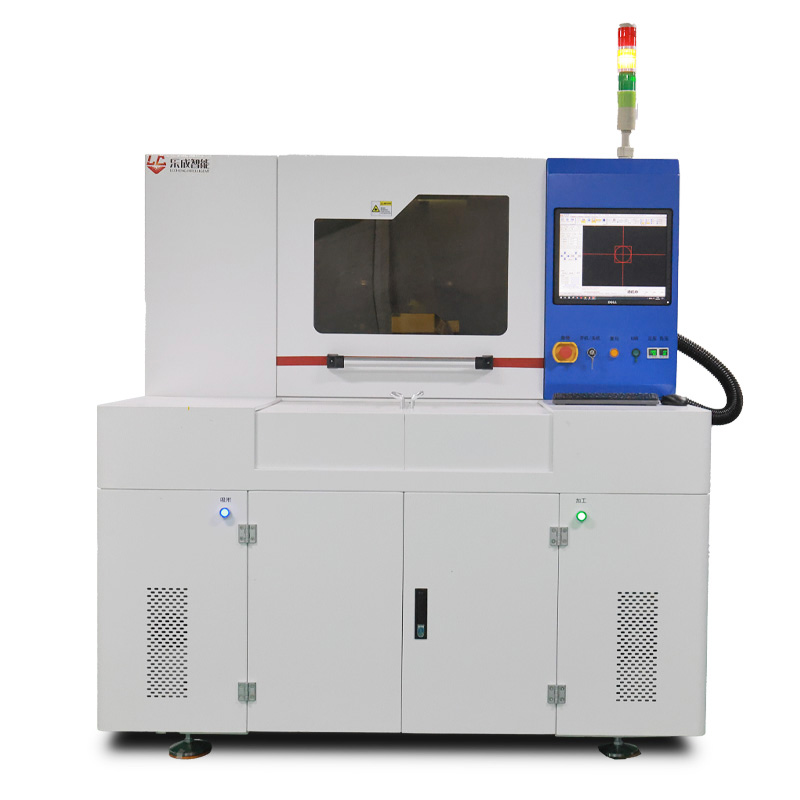
Achieving a kerf width on the scale of a human hair (10–50 microns) is a significant engineering feat. It is a complex interplay of laser parameters, optical design, and material response. The primary determinant is the laser spot size, which is in turn governed by the beam quality (M² factor), wavelength, and focusing optics. Systems from Lecheng Intelligent utilize high-quality fiber lasers or UV lasers with excellent beam profiles, combined with precision F-theta lenses and high-speed galvanometer scanners to deliver the smallest possible focused spot. However, the nominal spot size is just the beginning. The actual kerf is also influenced by the laser pulse energy, repetition rate, and scanning speed. Too much energy or heat input can cause thermal damage and heat-affected zone (HAZ) expansion, widening the kerf beyond the target. Advanced real-time focus tracking systems are crucial to maintain the optimal focal plane on the material surface, compensating for any substrate warp or stage tilt, as even a micron-level defocus can dramatically alter the kerf profile. This meticulous control ensures that the removal is clean, with minimal debris and taper.
Impact on Device Performance and Manufacturing Scalability
The precise control over kerf width has direct and profound implications for both the performance of the photovoltaic device and the economics of its manufacturing. In a perovskite solar module, the space between active cells (the kerf plus any isolation gap) is "dead zone." Minimizing the kerf directly maximizes the active area ratio, boosting the module's power output for a given size. Furthermore, consistent, narrow kerfs ensure reliable electrical isolation between cells (P1, P3) and low-resistance interconnection (P2), which are vital for high fill factor and voltage. From a production standpoint, achieving these micron-scale features with high speed and repeatability is key to scalable manufacturing. Equipment capable of maintaining 0.01–0.05mm kerf tolerances across a large-area substrate at high throughput, like Lecheng's laser scribing systems, enables the transition from lab-scale innovation to GW-level production. It ensures that the precision demonstrated in R&D can be faithfully replicated on the factory floor, turning a delicate laboratory process into a robust, high-yield industrial operation.
Mastering the laser kerf is mastering a fundamental building block of modern precision manufacturing. In the context of perovskite photovoltaics, achieving a consistent 0.01–0.05mm kerf is synonymous with achieving high efficiency, reliability, and commercial viability. It represents a convergence of advanced laser physics, precision motion control, and process engineering. For manufacturers, investing in technology that delivers such precision, like that from Lecheng, is not merely about making a cut; it's about carving out a competitive edge in the future of solar energy.
Related product and article resources
For procurement comparison and technical evaluation, readers can continue with these related product pages and supporting articles.
- Products
- Product catalog
- Contact the sales team
- Contact us
- Laser Scribing Machine RFQ Checklist for PV Cell Production Lines
- Laser Scribing vs Mechanical Cutting in Photovoltaic Production
- P1, P2 and P3 Laser Scribing: What Solar Manufacturers Should Know
- Lecheng Powers Dehu's 100MW Perovskite Pilot Line to Historic First Light