


Glass cutting problems cost manufacturers millions annually in scrap, rework, and warranty claims. Understanding these issues and their root causes is the first step toward eliminating them. Here are the eight most common glass cutting problems and how modern laser technology addresses each one.
Problem 1: Edge Chipping
What it looks like:
Visible chips along the cut edge, ranging from 50-500μm in size. Large chips are immediately visible; micro-chips require magnification to detect.
Root cause with mechanical cutting:
The scoring wheel creates chips during the initial score. When force is applied to break the glass, these chips propagate further. Harder wheels create smaller chips; softer wheels create larger chips but score deeper.
Impact:
· Edge strength reduced by 30-50%
· Visible defect in transparent applications
· Potential failure point under stress
Laser solution:
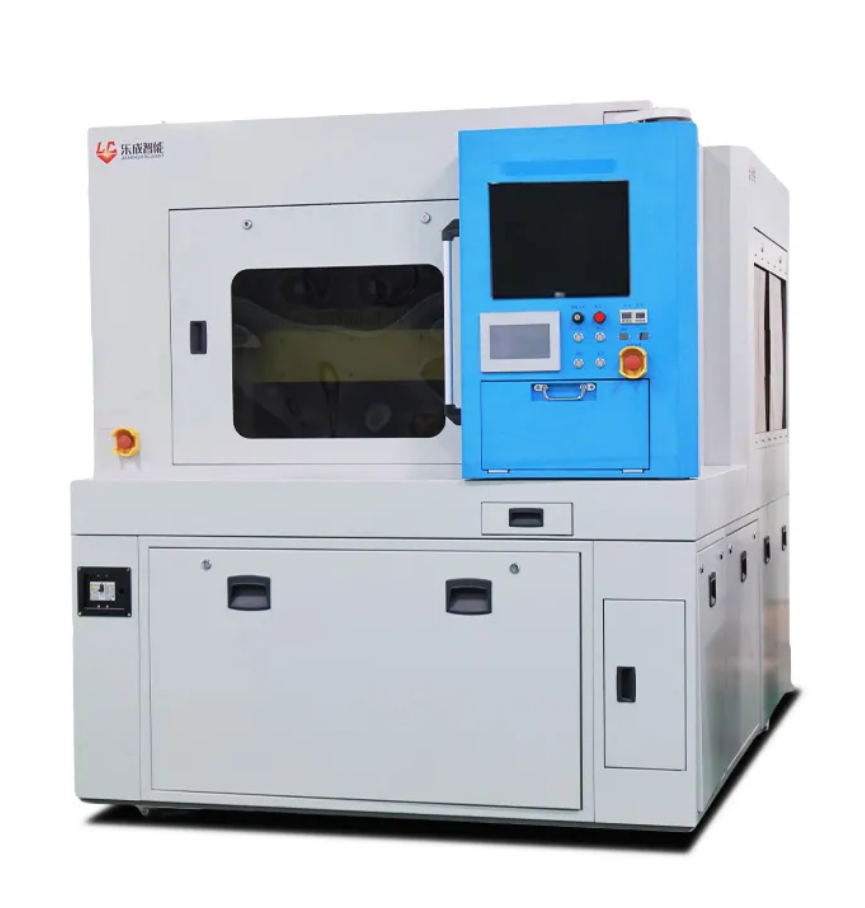
Picosecond laser scribing creates modifications inside the glass without mechanical contact. The subsequent thermal break occurs at the laser-modified zone, producing edges with <20μm chipping—often <10μm.
Quantified improvement:**
Method | Typical chip size | Edge strength
Mechanical + grinding | 50-200μm | Baseline
Picosecond laser + CO₂ break | <20μm | 200-300% higher
Problem 2: Micro-cracks
What it looks like:
Subsurface cracks extending 50-100μm from the cut edge. Not visible to naked eye; requires microscopy or edge strength testing to detect.
Root cause with mechanical cutting:
The mechanical stress of scoring creates a crack system that extends beyond the visible score line. These cracks can propagate over time, causing delayed failure.
Impact:
· Delayed failure (weeks or months after installation)
· Unpredictable break patterns
· Reduced fatigue life under cyclic stress
Laser solution:
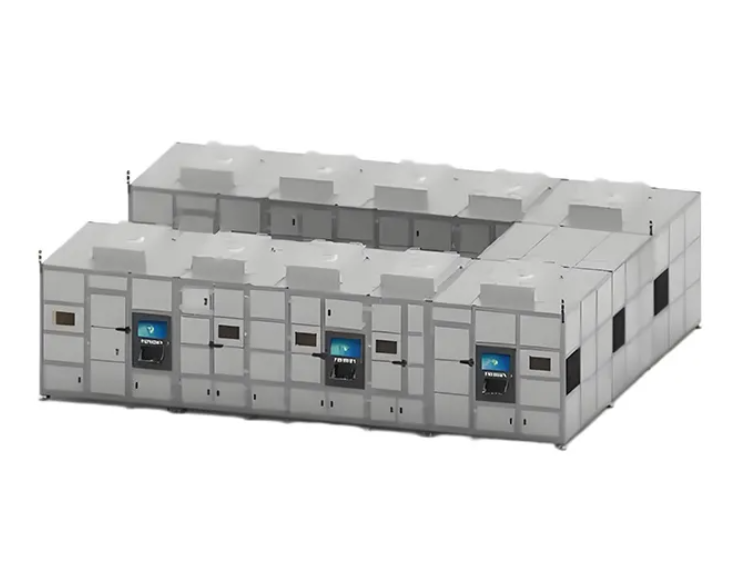
Non-contact laser processing introduces no mechanical stress. The heat-affected zone is controlled to <30μm, and this zone consists of modified glass structure rather than cracks.
Quantified improvement:
After 100 thermal cycles (-20°C to +80°C), mechanical-cut samples show 15-20% crack extension, while laser-cut samples show <2%.
Problem 3: Dimensional Inaccuracy
What it looks like:
Parts that don't match specification—oversized, undersized, or irregular edges.
Root cause with mechanical cutting:
· Guide wheel wear changing effective diameter
· Hand breaking causing angular deviation
· Material relaxation after cutting
· Temperature variation affecting glass dimensions
Impact:
· Assembly fit problems
· Increased scrap rate
· Customer rejections
Laser solution:
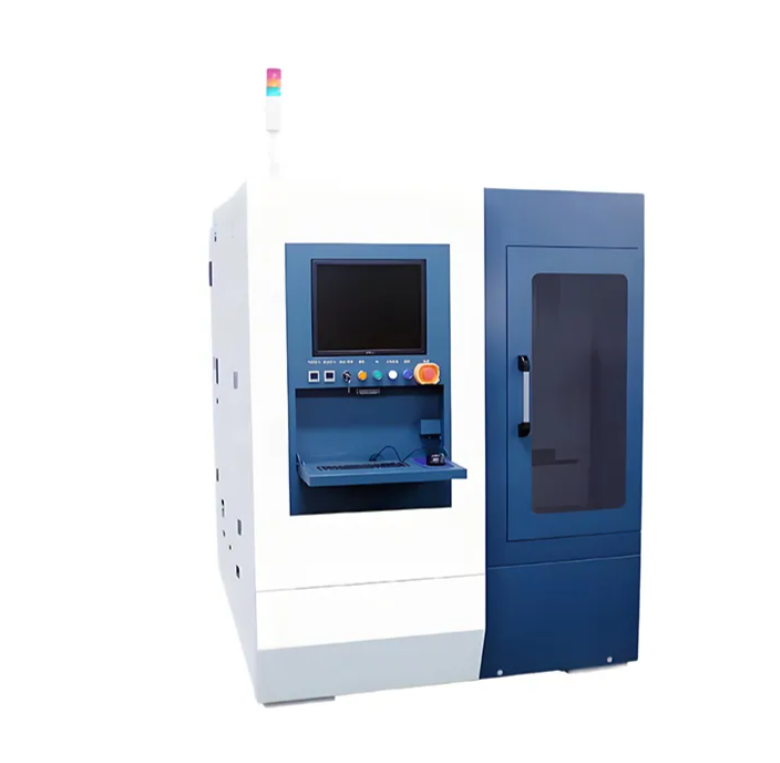
CNC motion systems provide ±0.02mm positioning accuracy. Vision systems align to actual material position, compensating for sheet variation. Temperature-controlled environments maintain stability.
Quantified improvement:
Method | Dimensional tolerance | Consistency (Cp)
Mechanical (manual) | ±0.5-1.0mm | 0.8-1.0
Mechanical (CNC) | ±0.1-0.3mm | 1.2-1.5
Laser (CNC + vision) | ±0.02-0.05mm | 1.8-2.5
Problem 4: Irregular Break Lines
What it looks like:
Breaks that don't follow the score line—angular deviation, "S" curves, or unexpected branching.
Root cause with mechanical cutting:
· Inconsistent scoring pressure
· Score line not deep enough
· Internal stress in the glass
· Improper breaking technique
· Contamination on the glass surface
Impact:
· Out-of-spec parts
· Unpredictable scrap rate
· Requires operator skill
Laser solution:
The laser creates a continuous modification zone that defines the break path. The thermal stress from the CO₂ laser follows this path precisely. Process parameters are controlled by software, eliminating operator variability.
Quantified improvement:
Break line deviation: <0.1mm (laser) vs. 0.5-2.0mm (mechanical manual)
Problem 5: Coating Damage
What it looks like:
Delamination, burning, or discoloration of surface coatings near the cut edge.
Root cause with mechanical cutting:
· Physical contact damaging coatings during handling
· Coolant reacting with coating materials
· Grinding particles embedding in coating
Impact:
· Reduced coating effectiveness
· Visual defects
· Possible warranty claims
Laser solution:
UV wavelength lasers (355nm) can process glass without affecting most coatings. The short wavelength is absorbed at the glass surface without penetrating to the coating interface. Alternatively, picosecond lasers at 1064nm can be tuned to minimize coating effects.
Quantified improvement:
Coating damage zone: <0.5mm (UV laser) vs. 2-5mm (mechanical + grinding)
Problem 6: Internal Stress Introduction
What it looks like:
Parts that distort after cutting, or unexpected breakage during subsequent processing.
Root cause with mechanical cutting:
The scoring and breaking process introduces residual stress into the glass. This stress can cause:
· Dimensional instability
· Reduced thermal shock resistance
· Spontaneous breakage during tempering
Impact:
· Processing failures downstream
· Customer warranty claims
· Unpredictable quality
Laser solution:
Properly controlled laser cutting introduces minimal residual stress. The thermal breaking process actually relieves stress in the edge zone. Post-cut annealing can further stabilize the material.
Quantified improvement:
Residual stress (measured by birefringence): 10-20 nm/cm (laser) vs. 50-100 nm/cm (mechanical)
Problem 7: Low Throughput
What it looks like:
Cannot meet production requirements; constant bottlenecks at glass cutting.
Root cause with mechanical cutting:
· Multiple operations required (score → break → grind → polish)
· Manual handling between operations
· Tool changes for different geometries
· Quality inspection after each operation
Impact:
· Missed delivery dates
· Overtime costs
· Capital tied in WIP inventory
Laser solution:
Laser cutting combines multiple operations:
1. Scribe (automatic)
2. Break (automatic)
3. Inspect (automatic vision)
One operator can manage multiple machines. Complex geometries don't require additional setup time.
Quantified improvement:
Metric | Mechanical + Grinding | Laser
Operations | 4-5 | 1-2
Operators per shift | 3-5 | 1-2
Cycle time | 120-180 sec | 45-90 sec
Problem 8: High Operating Costs
What it looks like:
Glass cutting costs exceeding budget; constant surprise expenses.
Root cause with mechanical cutting:
· Cutting wheels: $50-200/month
· Grinding wheels: $300-800/month
· Coolants: $100-300/month
· Waste disposal: $150-500/month
· Tool sharpening/dressing: $100-200/month
· Labor for multiple operations
Impact:
· Per-part costs exceeding quotes
· Margin erosion
· Competitiveness issues
Laser solution:
Operating costs are predictable and lower:
· Electricity: $100-300/month
· Optics maintenance: $200-400/month
· No cutting fluids or grinding media
· Reduced labor
Quantified improvement:
Annual operating cost: $15,000-35,000 (mechanical) vs. $5,000-12,000 (laser)
Problem Prevention Checklist
Before processing, verify:
Material Quality
· [ ] Glass type matches process parameters
· [ ] No pre-existing scratches or chips
· [ ] Coating intact (if applicable)
· [ ] Thickness within specification
Machine Condition
· [ ] Optics clean and aligned
· [ ] Motion system calibrated
· [ ] Vision system focused
· [ ] Cooling system functioning
Process Parameters
· [ ] Correct parameter set loaded
· [ ] Laser power verified
· [ ] Focus position confirmed
· [ ] Breaking parameters set
Environmental Conditions
· [ ] Temperature stable (±2°C)
· [ ] Humidity controlled
· [ ] Vibration minimal
· [ ] Clean air (no dust)
When to Consider Upgrading to Laser
If you're experiencing:
· More than 3% scrap rate
· Edge grinding required for most parts
· Complex shapes that need multiple setups
· Customer quality complaints
· Rising consumable costs
· Capacity constraints
...it's time to evaluate laser glass cutting.
ROI Calculation Example
A manufacturer producing 50,000 glass parts per month:
Current mechanical process:
· Scrap rate: 5% (2,500 parts)
· Grinding cost: $2.50/part
· Total quality-related cost: $125,000/month
After switching to laser:
· Scrap rate: 1% (500 parts)
· No grinding required
· Total quality-related cost: $25,000/month
Monthly savings: $100,000
Even with a $400,000 laser system investment, payback is achieved in 4 months.
Conclusion
Most glass cutting problems stem from the inherent limitations of mechanical processing. Laser technology doesn't just reduce these problems—it eliminates them at the source.
At Lecheng Intelligence, we've helped manufacturers across industries transition from mechanical to laser glass cutting. Our application engineers can evaluate your specific challenges and provide a detailed comparison of your current process versus laser alternatives.
Struggling with glass cutting quality issues? Contact our technical team for a free process evaluation.