


Solar Cell Testing Comparison Guide
Solar Simulator vs Outdoor Sunlight Testing: Which Is Better For Solar Cell Research
Solar simulators and outdoor sunlight testing are both important for solar cell research, but they serve different purposes. Buyers and researchers should compare spectral stability, testing repeatability, environmental influence, efficiency validation and pilot line compatibility before selecting the right testing method.
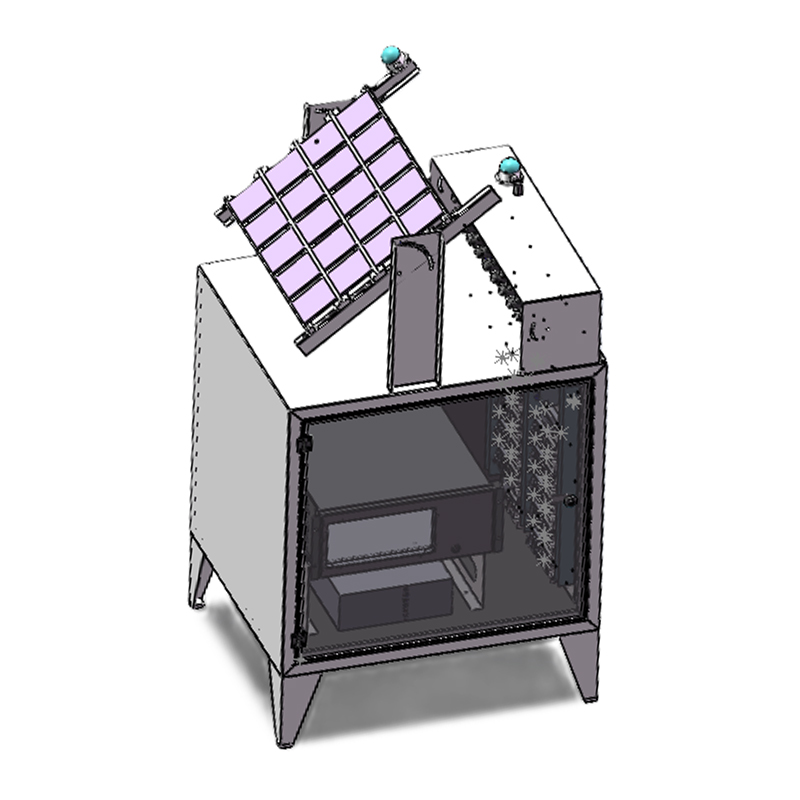
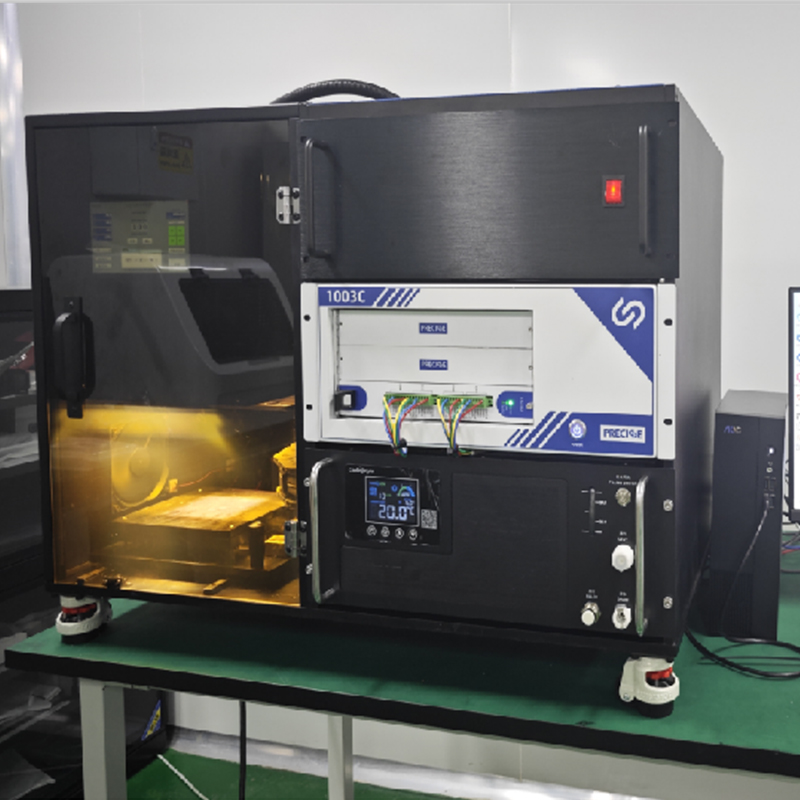
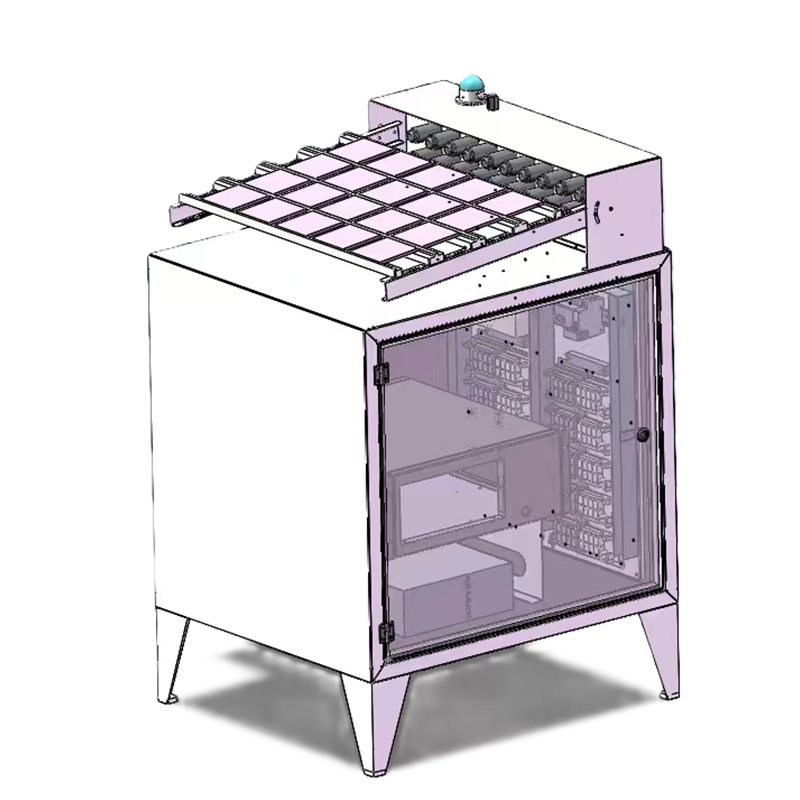
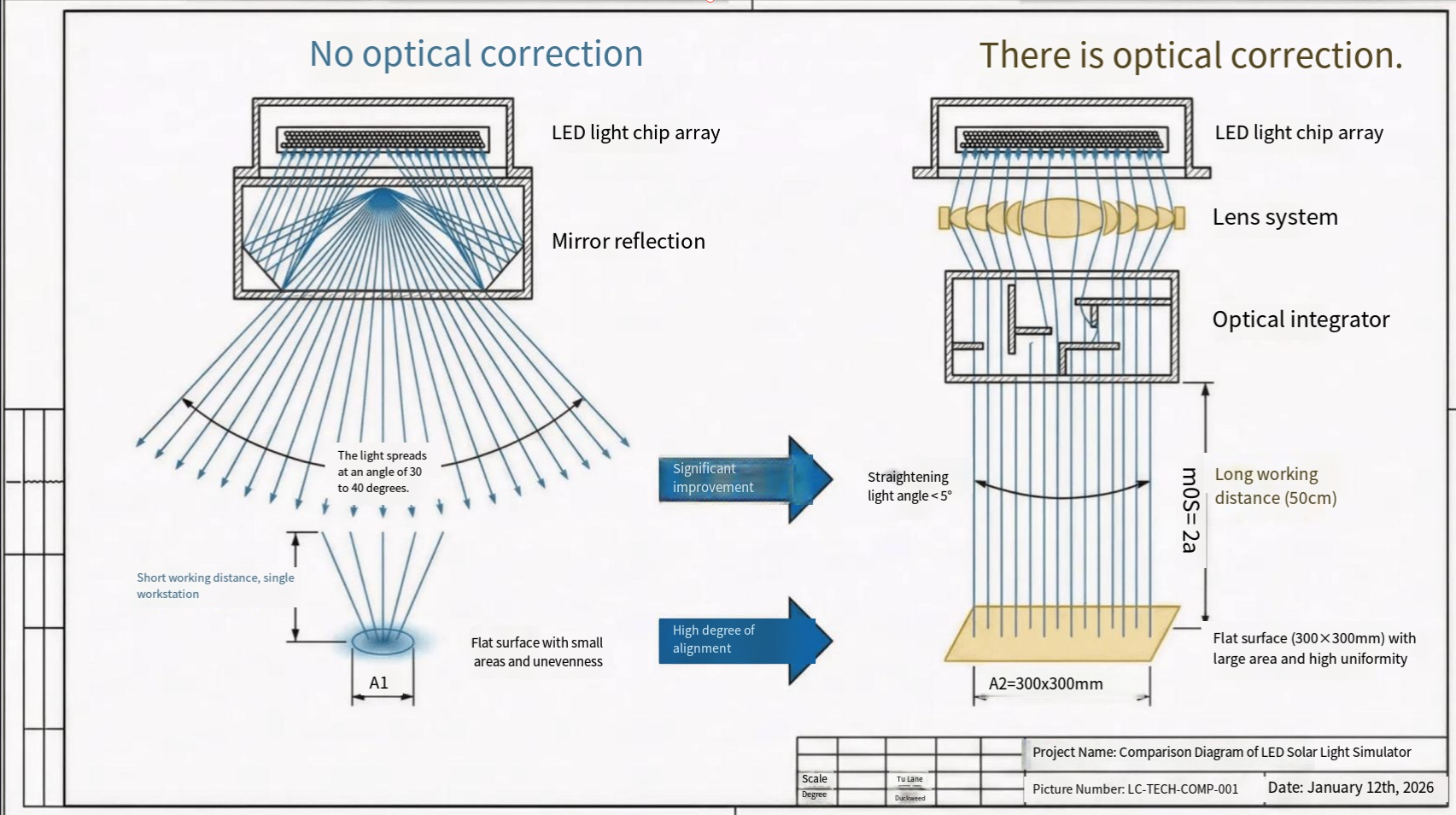
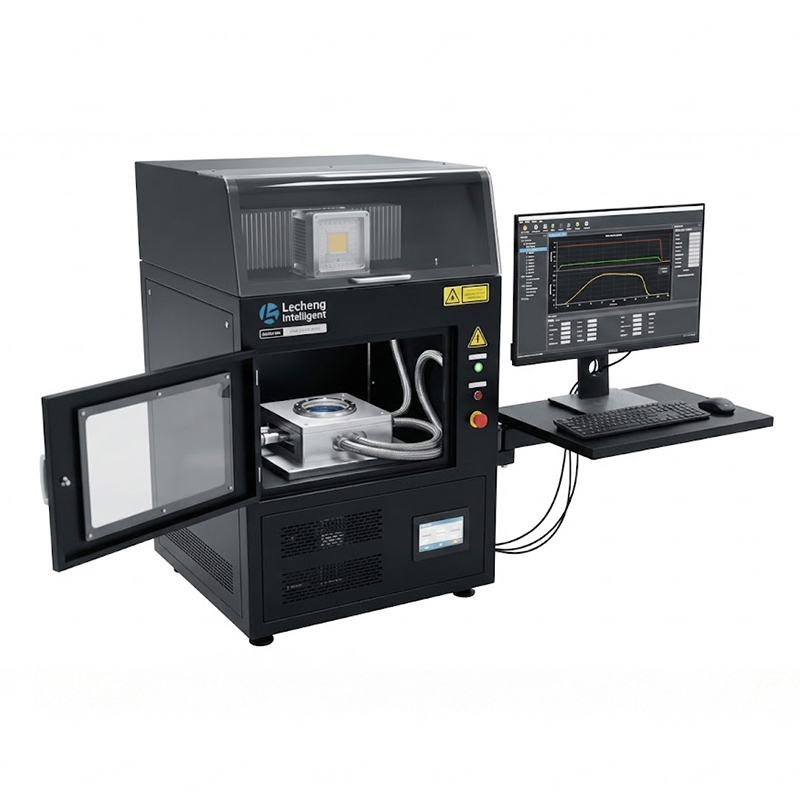
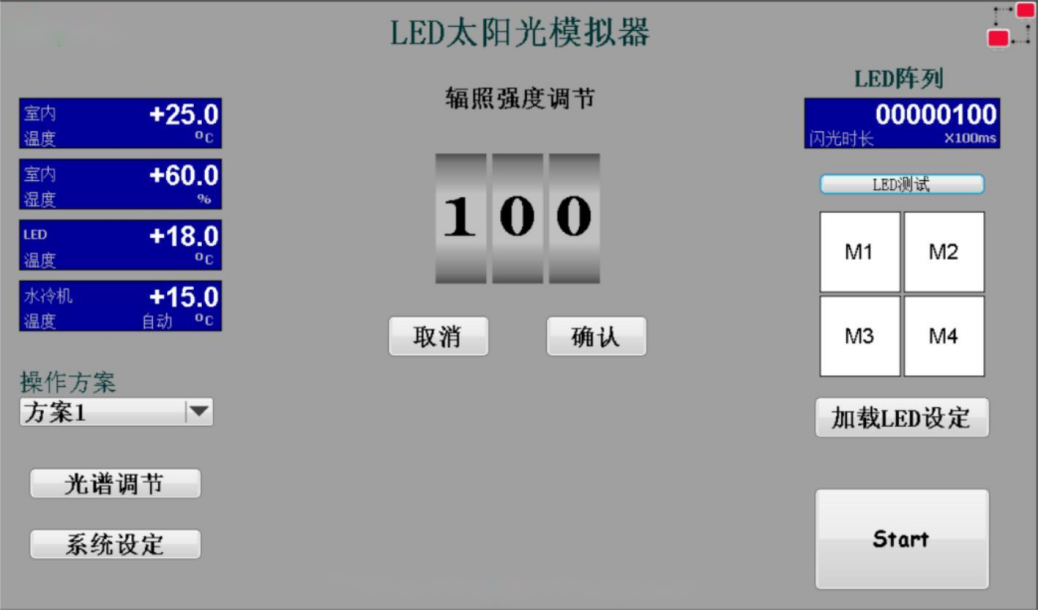
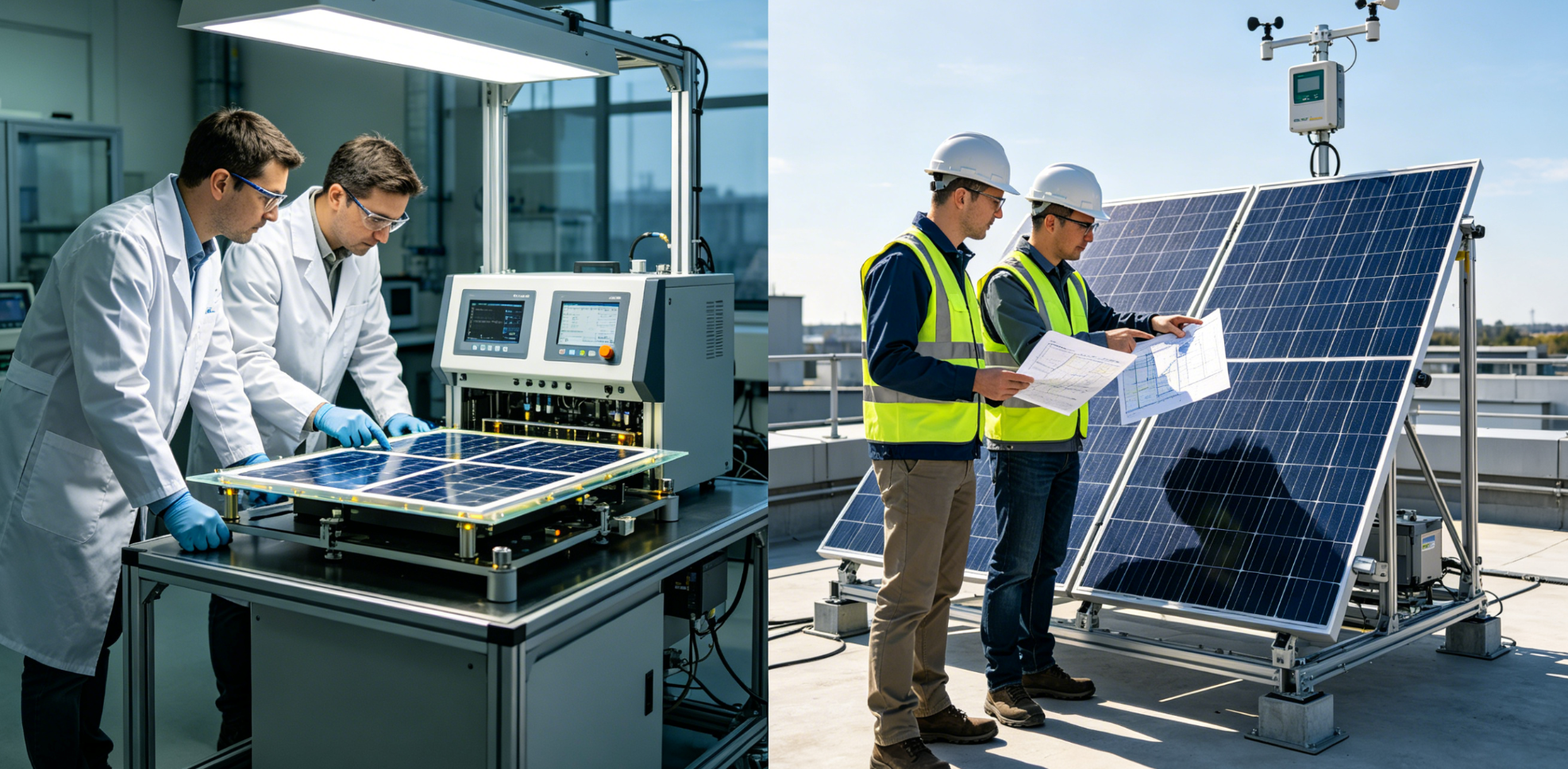
Get QuotePerovskite and thin-film solar cell research requires accurate efficiency measurement and stable testing conditions. Some researchers prefer outdoor sunlight testing because it uses natural conditions, while others rely on solar simulators for repeatability and controlled laboratory measurement. The best choice depends on whether the goal is laboratory research, pilot line validation, outdoor reliability testing or product comparison. Solar simulators provide controlled illumination under repeatable laboratory conditions. Stable and repeatable light intensity Controlled AM1.5G spectral conditions Suitable for IV curve comparison and batch testing Less affected by weather, temperature or cloud conditions Compatible with automated R&D and pilot line testing For perovskite and tandem solar cells, stable spectral conditions are especially important because material response can change under different wavelengths. Outdoor testing evaluates real environmental conditions, including natural sunlight, humidity, temperature and long-term weather exposure. Real operating environment validation Useful for outdoor stability and aging studies Can reveal environmental degradation problems No artificial light source required However, outdoor sunlight changes continuously during the day, making direct comparison between samples more difficult. For early-stage R&D, process optimization and pilot line testing, solar simulators are usually the preferred choice because they provide repeatable conditions and stable IV measurement. Outdoor testing is more suitable for reliability evaluation, weather exposure studies and long-term degradation analysis. Many advanced laboratories use both methods together. Most perovskite and thin-film solar projects use solar simulators for daily process optimization and IV comparison, while outdoor testing is used later for environmental validation and long-term reliability studies. Buyers planning pilot lines should prioritize stable solar simulators with IV integration, calibration support and scalable test area design. Will the system be used for R&D, pilot line QC or outdoor reliability testing? Do you need highly repeatable IV curve comparison? Will you test perovskite, tandem or thin-film solar cells? Do you need large-area module testing? Will the system integrate with IV testers and data software? Do you need accelerated indoor aging capability? How important is real environmental exposure validation? Will future pilot line scale-up require automated testing integration? Solar simulators and outdoor sunlight testing each have important advantages for solar cell research. Solar simulators provide repeatable laboratory conditions and efficient pilot line integration, while outdoor testing helps validate real environmental stability and long-term degradation behavior. For most perovskite and thin-film R&D projects, combining both methods provides the most reliable evaluation strategy. Contact Lecheng Laser to discuss solar simulator configuration, IV testing integration and pilot line testing solutions.Why This Comparison Matters
Advantages Of Solar Simulators
Advantages Of Outdoor Sunlight Testing
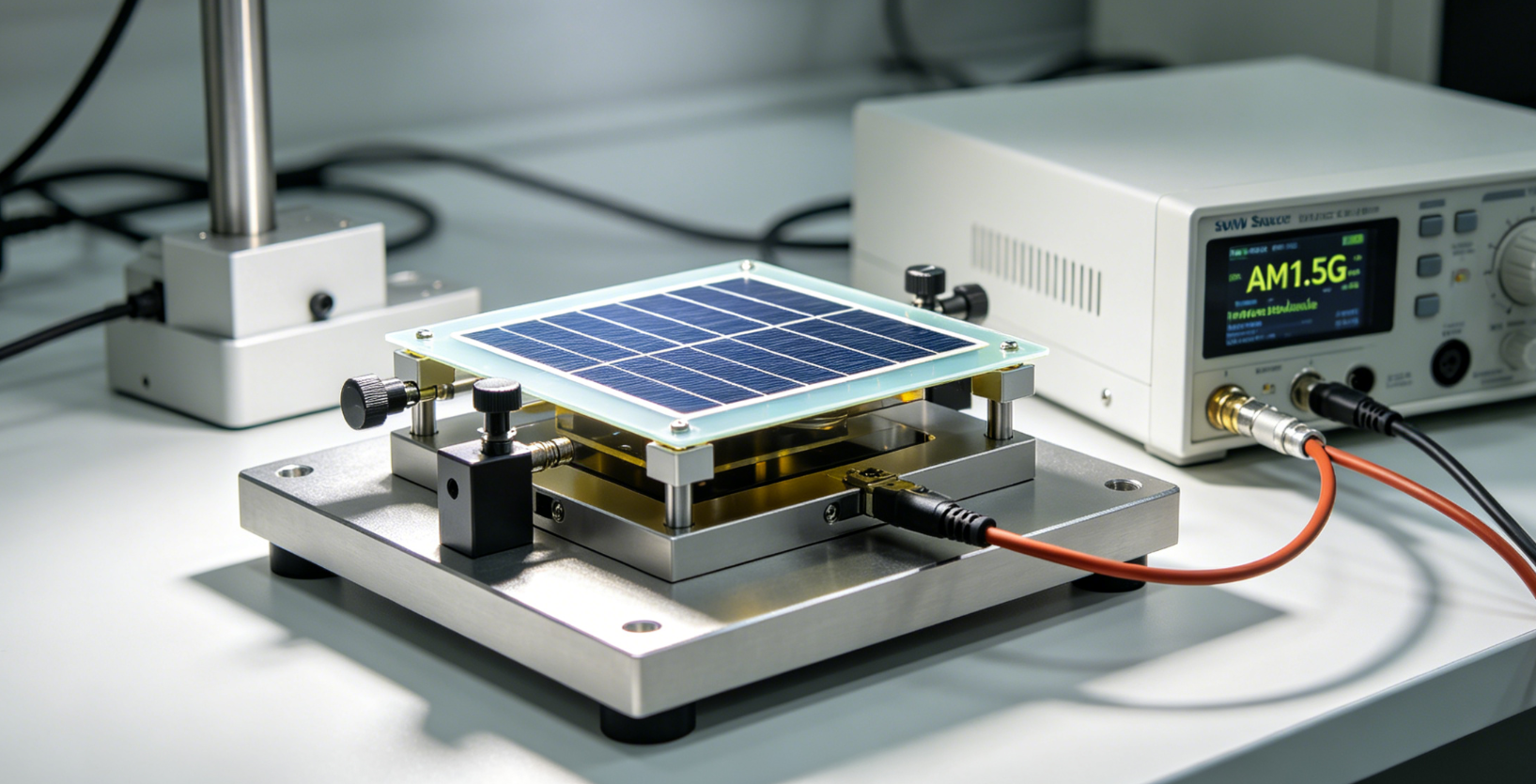
Solar Simulator vs Outdoor Testing Comparison
Comparison Item Solar Simulator Outdoor Sunlight Testing Light Stability High repeatability Affected by weather and time Spectral Control Controlled AM1.5G simulation Natural spectral variation Batch Comparison Easy to compare multiple samples Harder to maintain consistent conditions Environmental Validation Limited environmental influence Real outdoor condition evaluation Pilot Line Compatibility Strong integration with IV and automation systems More difficult for automated process testing Long-Term Aging Accelerated indoor aging possible Real outdoor degradation observation Which One Is Better For Perovskite Research?
Recommended Strategy For R&D Labs And Pilot Lines
Questions Buyers Should Ask Before Choosing
Conclusion
Need A Solar Simulator For Perovskite Or Thin-Film Testing?